
Cool vs Warm Undertone Tests
Take our cool vs warm undertone tests to determine your skin undertone. Learn the difference between cool and warm undertones and find your perfect colors.
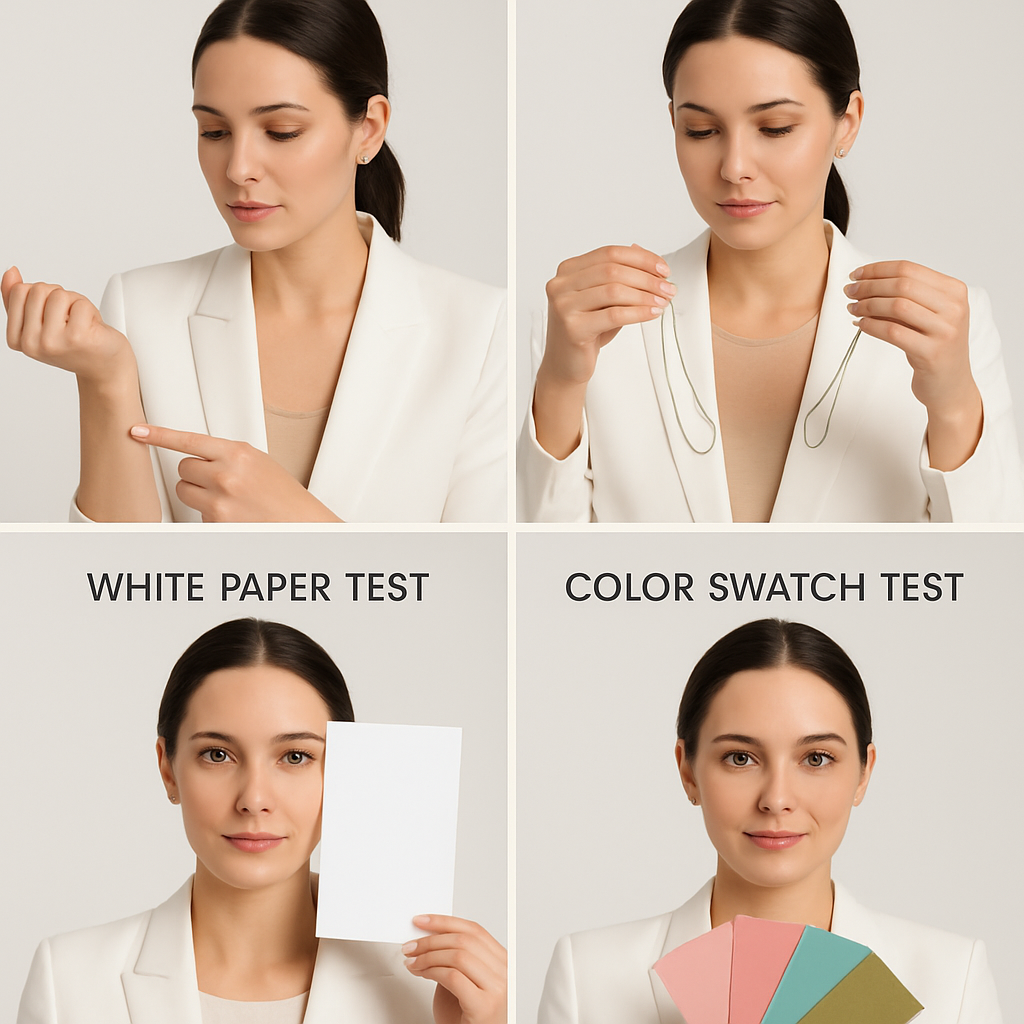
How to Test Your Undertone
There are several ways to determine if you have cool or warm undertones. Try these tests to find out:
Cool Undertone Signs
- Veins appear blue or purple
- Silver jewelry looks better
- Cool colors flatter you
- Pink or rosy undertones
Warm Undertone Signs
- Veins appear green or olive
- Gold jewelry looks better
- Warm colors flatter you
- Yellow or golden undertones
Detailed Undertone Tests
Try these comprehensive tests to determine your skin undertone. For best results, test in natural lighting without makeup.
Vein Test
Look at the veins on your wrist in natural light.
- Blue/purple veins = Cool undertone
- Green veins = Warm undertone
- Both or unclear = Neutral undertone
Jewelry Test
Try on gold and silver jewelry to see which looks better.
- Gold looks better = Warm undertone
- Silver looks better = Cool undertone
- Both look good = Neutral undertone
White Paper Test
Hold a white piece of paper next to your face in natural light.
- Skin looks pink/blue = Cool undertone
- Skin looks yellow/peachy = Warm undertone
- No obvious tint = Neutral undertone
Color Test
Try on different colored clothing or hold colored fabrics near your face to see which colors make you look more vibrant and healthy.
Cool Colors Test
Try these cool colors and see if they make you look more vibrant:
- Royal blue, navy, cool gray
- Purple, lavender, cool pink
- Teal, mint green, cool green
- If these look good, you likely have cool undertones
Warm Colors Test
Try these warm colors and see if they make you look more vibrant:
- Orange, gold, warm brown
- Peach, coral, warm pink
- Olive green, warm green
- If these look good, you likely have warm undertones
Sun Reaction Test
How your skin reacts to sun exposure can also indicate your undertone:
Cool Undertone
Typically burns easily and rarely tans.
- Burns easily in the sun
- Rarely tans or tans very little
- May have freckles
- Skin may turn pink or red
Warm Undertone
Typically tans easily and rarely burns.
- Tans easily in the sun
- Rarely burns
- Gets golden or olive tan
- Skin may turn golden brown
Neutral Undertone
May burn first, then tan.
- Burns first, then tans
- Moderate sun sensitivity
- May have mixed reactions
- Skin may turn pink then brown
Common Mistakes to Avoid
Avoid these common mistakes when testing your undertone:
❌ What Not to Do
- Testing in artificial lighting
- Wearing makeup or self-tanner
- Testing on tanned skin
- Using colored clothing that affects the test
- Testing in poor lighting or shadows
- Rushing through the tests
✅ Best Practices
- Test in natural daylight near a window
- Remove all makeup and skincare products
- Test on clean, bare skin
- Wear neutral-colored clothing
- Take your time with each test
- Test multiple areas of your body
Frequently Asked Questions
What if I'm between cool and warm?
You likely have neutral undertones, which means you can wear both cool and warm colors. You might be a neutral season or have a preference for one temperature family.
Does my tan affect my undertone?
No, a tan doesn't change your undertone. Look at areas that don't tan (like your inner wrist) or consider your natural coloring before any sun exposure.
What if the tests give different results?
Try multiple tests and see which result is most consistent. If you're still unsure, our AI analysis can provide a definitive answer by analyzing your photo.
Can I change my undertone?
No, your undertone is determined by your genetics and doesn't change. However, your overtone (surface color) can change with sun exposure, makeup, or other factors.
Ready to Find Your Undertone?
Take our comprehensive color analysis quiz to determine your exact undertone and color season.